Permaculture is a design system that works with nature to make a better world for all. When observing the natural world this set of governing principles can be seen. Permaculture aims to mimic these principles in all areas to provide our food, water, shelter and energy needs. Core permaculture principles are:
- Earth Care: enabling all life systems to continue and increase.
- People Care: enabling access to the resources people need for a good quality of life.
- Fair Share: to share the earth’s resources for all its’ inhabitants.
“What permaculturists are doing is the most important activity that any group is doing on the planet”.
-David Suzuki
Permaculture Farming
Permaculture farming is more than the sum of it's parts. It is based on an integrated system. Ideally, one component of the system has many functions or uses. Also that one use r function is performed by several different components. Permaculture aims to create fail-safe feedback loops that repeat themselves.
Sound Confusing? Probably, but when putinto context it becomes far more understandable. Here is an example of a permaculture system at All Sorts Acre.
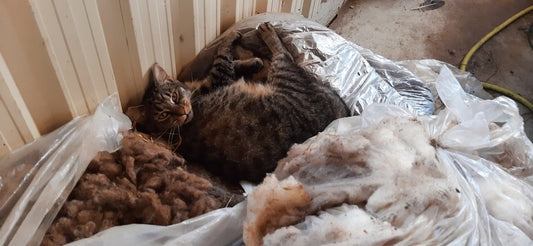
Our sheep have several functions, but we also have other ways to perform the functions
- fibre> sheep, or angora rabbits of no sheep
- meat>sheep, chickens, pig, sheep
- fertility>sheep, chickens, pigs, plants, rabbits if no sheep
- lawn mowing>sheep, a push mower, rabbits if no sheep
The above example indicated that if we didn't have sheep then getting rabbits would be the next most logical idea. When looking at this it does make me think that getting rabbits would be a good move for us. The angora rabbits would fill the void if something were to happen to the sheep. This is a simple example of a natural feedback loop.
When these systems are put into place, the entire system becomes more resilient. If one thing disappears, another tings will be there to fill the niche left.
In a farming context this affords many opportunities for products and services. All Sorts Acre products include meat, wool, and specialty plants. Our services include lawnmowing, education, and design. ALL of what we do is based upon practical experience.
Permaculture farming is also designed around what is called:
Zones of Use
Each household will determine their own zones of use based on their lifestyle and not all families will have the same zones of use. We all use our living spaces in our own unique way.
Our Zones are designed in a typical permaculture fashion.
- ZONE 0 — The house, or home centre. Here permaculture principles would be applied in terms of aiming to reduce energy and water needs, harnessing natural resources such as sunlight, and generally creating a harmonious, sustainable environment in which to live, work and relax
- ZONE 1 — The zone nearest to the house, the location for those elements in the system that require frequent attention, or that need to be visited often. Here it is where we have the kitchen garden and planter boxes as well as our worm compost bins. in the spring it is where some of our seedling reside.
- ZONE 2 — This area is used for perennial plants that require less frequent maintenance, such as occasional weed control (preferably through natural methods such as spot-mulching) or pruning, including currant bushes and orchards. This is where we keep perennial gardens, fish pond, and our brooder coop for chicks.
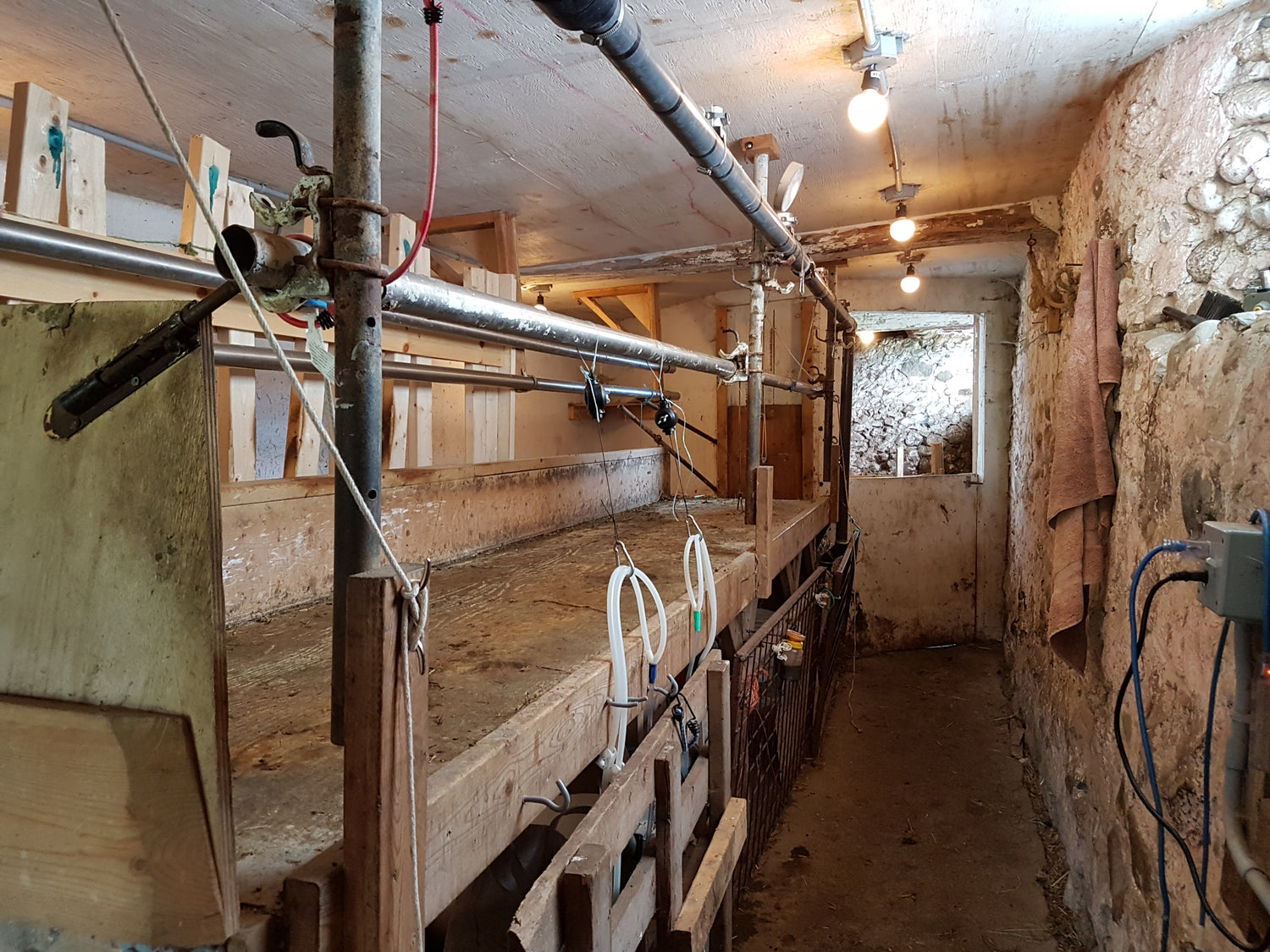
- ZONE 3 — The area where maincrops are grown, both for domestic use and for trade purposes. Zone 3 here also consists of our forest gardens are as they don't require as much maintenance as well as our main livestock of sheep and chickens. We visit this area at least twice a day, but it is not for extended periods of time, more for checking up and feeding/watering. Actually we spend a lot of time here just watching and enjoying the animals.
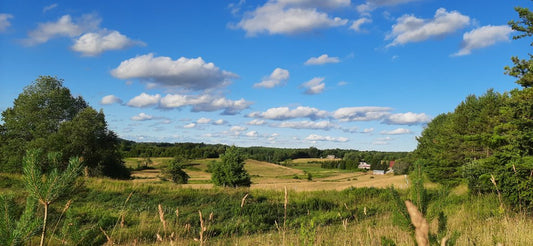
- ZONE 4 — A semi-wild area. This zone is mainly used for forage and collecting wild food and timber production. Also for pasture and the compost pile. The compost pile is often closer to the house but as the majority of the compost comes from the barns it is more efficient to have the compost closer to the barns.
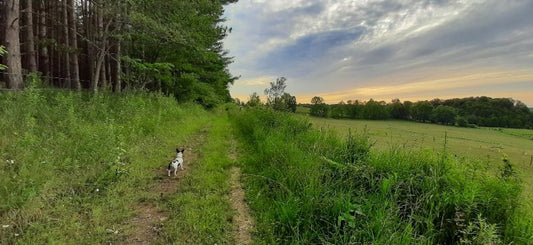
- ZONE 5 — A wild area. There is little human intervention in zone 5 apart from the observation of natural eco-systems and cycles. Here is where the most important lessons of the first permaculture principle of working with, rather than against, nature is learned. We have a small area on the property that we leave alone, but most of it is in the woods. We collect wild foods and learn about nature from our Zone 5.